


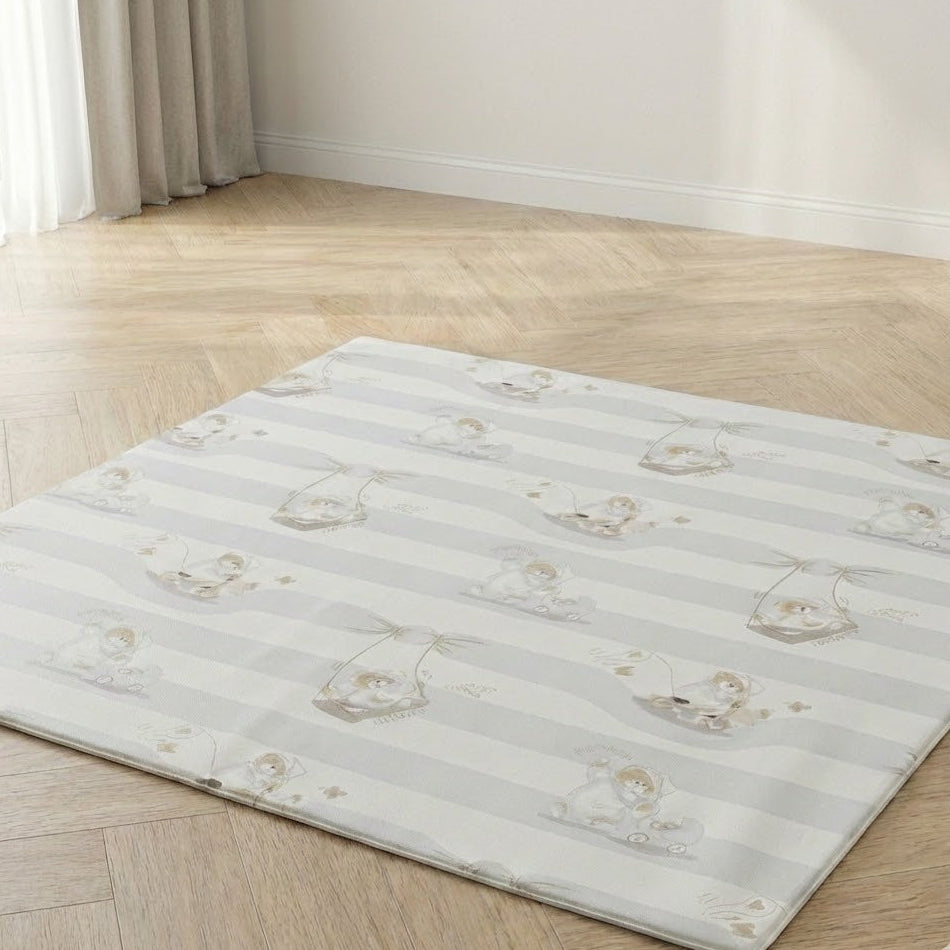
Many parents consider the activity surface (the "university") a safe place to place their baby, but studies show that this environment has a critical impact on brain, motor, and nervous system development. A scientific review of the relationship between tummy time, sensory integration, and choosing the right surface.
The human brain undergoes its most rapid growth during the first year of life. According to neurological studies, about a million new synaptic connections are formed in a baby's brain every second. These connections do not form in a vacuum; they are a direct result of interaction with the environment.
While the crib is intended for sleep and rest (reducing stimuli), the activity surface is the "laboratory" where the baby conducts his first experiments in physics (gravity), biomechanics (movement), and cognition (cause and effect).
1. The physiological challenge: preventing plagiocephaly (flat/crooked head) and strengthening the shoulder girdle
Since the American Academy of Pediatrics' (AAP) "Back to Sleep" campaign in the 1990s, there has been a dramatic decrease in crib deaths, but at the same time there has been an increase in the phenomenon of "Plagiocephaly" - the flattening of the back of the skull as a result of prolonged lying on the back.
The agreed-upon medical solution is "tummy time" while awake. Lying on the stomach requires the baby to activate the neck, erector, and shoulder girdle muscles against gravity. A quality activity surface plays a dual role here:
-
Ergonomics: The surface must be padded enough to prevent chest discomfort, but firm enough to allow for "push-ups" (pushing off the floor).
-
Motivation: For the baby to agree to stay in this challenging position, the surface must provide visual stimuli at eye level (such as illustrations on the surface itself or a safety mirror).
2. Sensory Integration
The baby perceives the world through the senses. Sensory integration theory (developed by Dr. Gene Ayres) holds that the brain's ability to organize sensory information is the basis for learning and behavior.
Here we encounter a common problem in the baby products market: sensory overstimulation . Surfaces that combine flashing lights, loud electronic sounds, and bright neon colors can stress a baby's nervous system, leading to crying and avoidance.
On the other hand, A university designed according to Montessori or classical developmental principles will offer:
-
Visual focus: soft colors and clear but not jarring contrast.
-
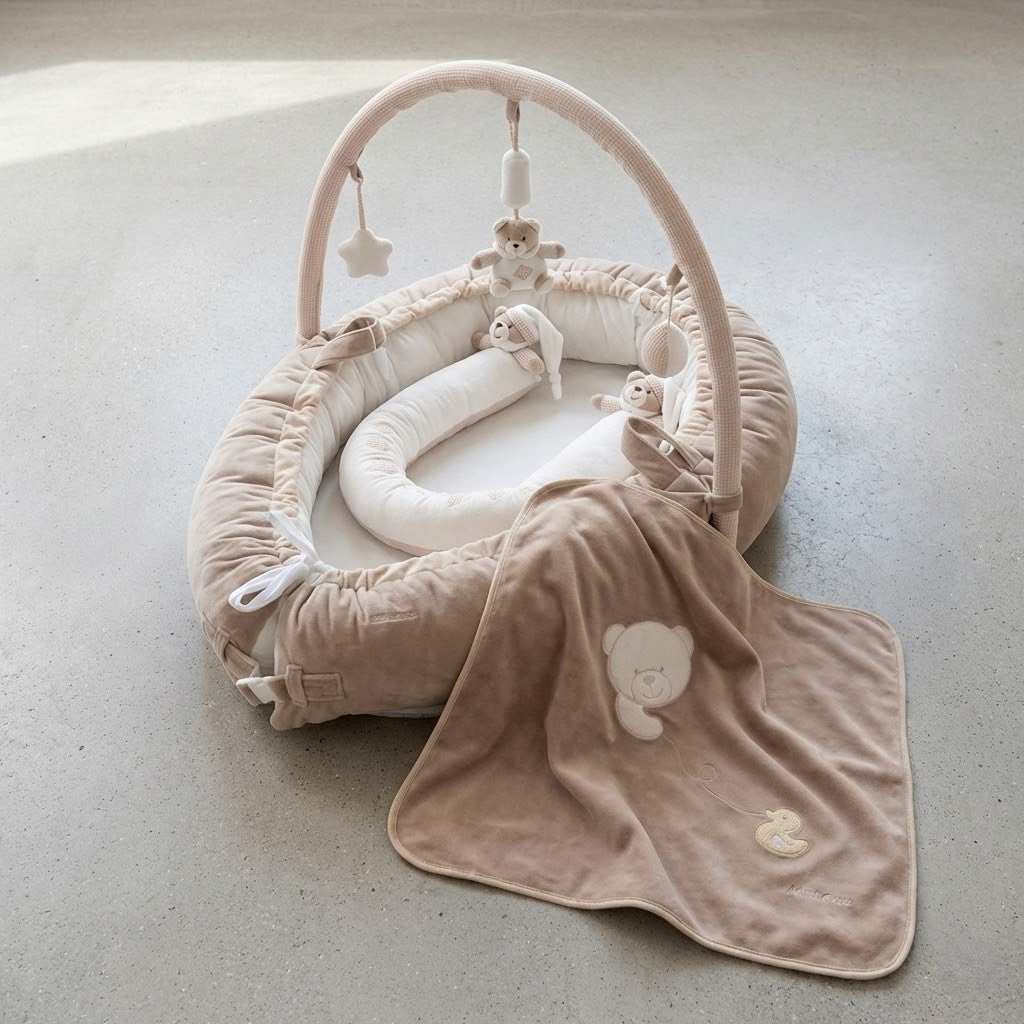
Tactile focus (touch): Using fabrics with different textures (velvet, cotton, embroidery) that encourage the baby to explore using their hands and mouth, without unnecessary noise.
3. Coordination and fine motor skills
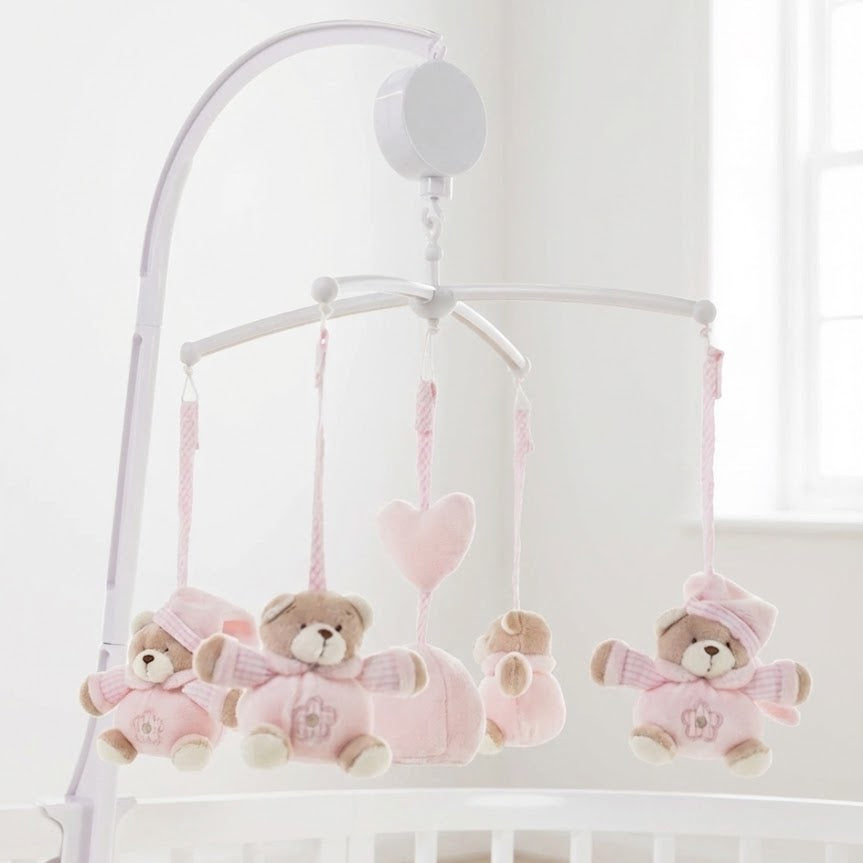
Beyond gross motor skills, the activity surface is the arena where hand-eye coordination develops. Around 3-4 months of age, the baby begins to reach out and reach for objects. The arches above the surface allow the baby to gauge distance and depth. When he manages to touch a hanging toy and move it, he learns an important cognitive lesson about cause and effect ("I moved my hand -> the toy moved -> there was a pleasant noise").
4. Safety and Toxicology: The Breathable Surface
The skin is the largest organ in the body, and in infants it is particularly permeable and sensitive. Dermatological studies indicate the importance of contact with hypoallergenic materials in preventing atopic dermatitis (skin asthma). When choosing a surface, it is medically important to prefer natural or high-quality fabrics that have met strict toxicity standards (such as Oeko-Tex or the European EN71 standard), as opposed to simple polymer sponge surfaces that may emit volatile organic compounds (VOCs).
Summary and recommendations
An activity surface is much more than a play mat; it is the foundation on which your child’s first motor milestones are built. The professional recommendation is to choose a surface that balances physical comfort with precise sensory stimulation – one that encourages curiosity but also inspires calm. Invest in a surface made of high-quality, soft materials that will allow your baby to explore the boundaries of his body with complete confidence.
Sources for further reading and medical references:
-
American Academy of Pediatrics (AAP). "Back to Sleep, Tummy to Play". HealthyChildren.org .
-
Kuo et al. (2008). "The influence of tummy time on motor development in infants." Pediatric Physical Therapy .
-
Ayres, A.J. (2005). Sensory integration and the child: Understanding hidden sensory challenges . Western Psychological Services.
-
Mao, A., et al. (2021). "Toys and infant development: The role of texture and material safety." Journal of Child Health Care .


Leave a comment
This site is protected by hCaptcha and the hCaptcha Privacy Policy and Terms of Service apply.